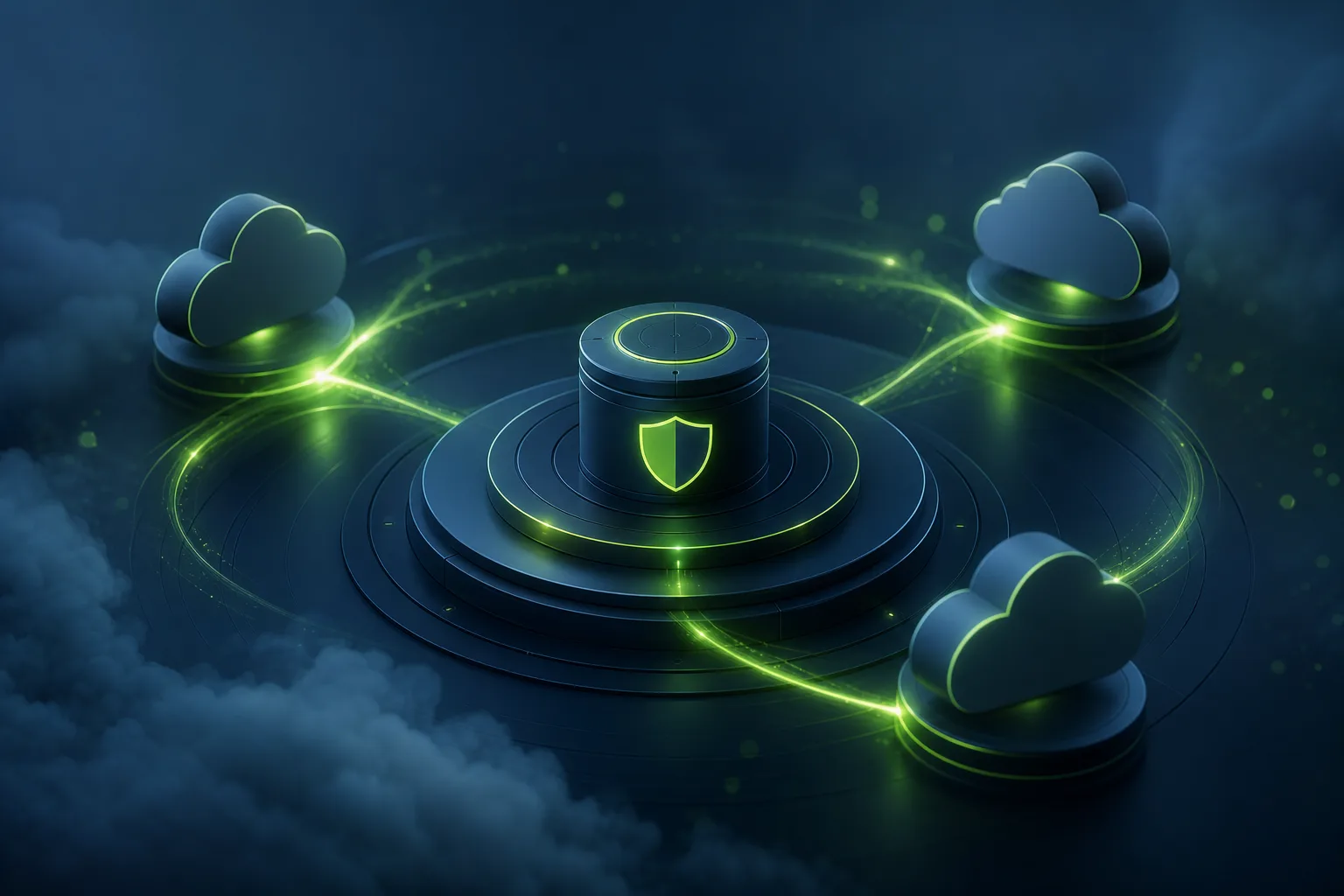
Multi-cloud is hard. We make it operationally simple. AWS, Azure, Google Cloud, and IT Vortex private cloud managed by one team, billed on one invoice, with one person accountable when something goes wrong.
Most cloud providers are also resellers of one hyperscaler. Their advice is shaped by that relationship whether they admit it or not. We are not. We architect for the workload, not for the partner program tier.
AWS, Azure, and Google Cloud. Certifications across all three. We deploy on the platform that fits the workload, not the one we get the best margin on.
Production incident on AWS at 2am? You call us, not Amazon. We engage Amazon. You get one phone number, one escalation path, one team that owns the outcome.
One monthly invoice covering all clouds. Reserved instances, savings plans, and commitment-based pricing managed centrally. Tags and chargeback enforced consistently.
We design for portability where it matters. Workloads that need to move between clouds can move. Workloads that are best on one platform stay there. The choice stays yours.

Workload-by-workload recommendations on which cloud fits each application. AWS, Azure, Google Cloud, or private cloud. The recommendation is driven by your requirements, not our channel partner status.
Microsoft Entra, Okta, or Active Directory federated across all clouds. Users get one identity. Administrators get one access control plane. Auditors get one consolidated trail.
Cloud spend across all four planes visible in one dashboard. Reserved instances, savings plans, and commitment-based pricing actively managed. Anomaly detection alerts when costs spike.
Production on one cloud, backup repositories on another. Cross-cloud replication for the workloads where regional events on a single hyperscaler are unacceptable risks.
AWS CloudWatch, Azure Monitor, Google Cloud Operations, and our private-cloud monitoring all feed one operational view. Alerts route to one on-call engineer.
One named customer success engineer across all clouds. Continuity of relationship matters more than channel-partner badges. You get a person, not a portal.

Real certifications on staff for all three hyperscalers. Solutions architects, security engineers, and operations engineers with current credentials, not expired badges.
When a workload belongs on hyperscaler infrastructure, we build and run it on AWS, Azure, or Google Cloud alongside your VCF private cloud, as part of the multi-cloud portfolio.
We are not owned by, funded by, or financially dependent on any hyperscaler. The advice you get is not shaped by quarterly partner tier requirements.
The runbooks, monitoring standards, and incident response procedures we use on private cloud apply to AWS, Azure, and Google Cloud workloads. Consistency of operations matters.
Multi-cloud is not a strategy by itself. It is the natural result of making honest per-workload placement decisions in an organization that values vendor leverage and operational resilience.
Organizations that grew through acquisition and inherited workloads on multiple clouds. The choice is rationalize to one cloud or operate the existing footprint well. Often the math favors the latter.
Customers who want each workload on the cloud best suited to it: data analytics on Google, Microsoft-heavy stacks on Azure, broad ecosystem on AWS, steady-state on private cloud.
Organizations that have deliberately decided concentrating on one hyperscaler creates unacceptable lock-in risk. Multi-cloud preserves leverage at the cost of operational complexity.
A leading global real estate firm used IT Vortex cloud-based services to scale from 100 to over 1,000 team members worldwide, attracting the savviest, most sought-after agents in the industry.
A multi-billion-dollar multinational corporation executed a flawless headquarters relocation on IT Vortex cloud hosting, with zero downtime and zero disruption to global operations.
We have partnerships with all three hyperscalers as needed to deliver services to our customers. We are deliberately not aligned exclusively with any one of them. The advice we give about workload placement is not influenced by tier requirements or quarterly partner targets.
Hyperscaler invoices flow through us. We consolidate AWS, Azure, Google Cloud, and IT Vortex private cloud into one monthly statement with allocation, tagging, and chargeback support. The underlying pricing matches what you would pay direct, plus a management fee that is transparent.
Yes. Reserved instance management, savings plan optimization, commitment-based pricing, instance right-sizing, storage tier migration, and idle resource cleanup. Most customers see meaningful savings independent of any architecture changes. The optimization work typically pays for itself in the first quarter.
Architectures designed for multi-cloud assume hyperscaler regional events will happen. Production workloads have failover paths to another cloud or to our private cloud. DR runbooks are written and tested. The blast radius of a single-cloud event is bounded by design.
Federation. Your existing Microsoft Entra, Okta, or Active Directory is the source of truth. AWS IAM Identity Center, Microsoft Entra ID, and Google Cloud Identity all federate to it. Users authenticate once and access resources on whichever cloud they need. Single sign-on, single audit trail.
Existing AWS accounts, Azure subscriptions, and Google Cloud projects can be brought under management without migration. We onboard your existing accounts to our management plane, take over operations, and apply our cost optimization and security standards. No data movement required.
Tell us about your current cloud footprint and the workloads that matter most. We will come back with an architecture recommendation and cost analysis within one business day.
One business day response. No obligation.