
Enterprises are moving from “backup as an insurance policy” to “backup as a strategic data asset.” That shift is accelerating fast, and Veeam’s acquisition of Securiti AI is one of the clearest market signals yet.
In late 2025, Veeam announced and completed its acquisition of Securiti AI for approximately $1.725B, positioning the combined portfolio around what Veeam describes as an industry-first “trusted data platform.” The goal is to help organizations understand, secure, recover, and operationalize data for AI.
Veeam’s intent is explicit: unify data resilience with DSPM, privacy, governance, and AI trust across both production and secondary data.
- Veeam acquisition announcement:
https://www.veeam.com/company/press-release/veeam-to-acquire-securiti-ai.html - Completion press release:
https://www.veeam.com/company/press-release/veeam-acquires-securiti-ai.html
Table of Contents
- What happened: the deal in plain English
- Why now: AI is forcing a new definition of data resilience
- DSPM explained (and why backups are now in scope)
- What changes for IT leaders: 7 practical implications
- What IT Vortex recommends: an AI-ready BaaS roadmap
- FAQ
1) What happened: the deal in plain English
Veeam, long known for enterprise backup and recovery, acquired Securiti AI, a leader in Data Security Posture Management (DSPM) with deep capabilities in data privacy, governance, and AI security.
This is not simply “Veeam adding another security tool.”
Instead, Veeam is positioning a unified control plane that spans:
- Production data (applications, SaaS platforms, cloud workloads, endpoints)
- Secondary data (backups, replicas, archives)
- Security and governance context (what data exists, where it lives, who can access it, and what risk it carries)
- Resilience operations (recovery, rollback, immutability, and near-zero data loss objectives)
Reuters summarized the rationale succinctly: the acquisition strengthens Veeam’s ability to protect and manage cloud data, particularly for AI use cases, by integrating Securiti AI’s Data Command Center into Veeam’s resilience platform.
One of the most important outcomes is how this changes the definition of “backup success.”
Historically, organizations measured backup programs using:
- Coverage
- RPO / RTO
- Restore testing
Those metrics still matter, but they are no longer sufficient.
In an AI-driven operating model, IT and security leaders are now being asked:
- Do we know where sensitive data exists before it is copied into backups and archives?
- Can we identify whether regulated data (PII, PHI, PCI, IP) is spreading into places it shouldn’t?
- After a ransomware event, can we restore clean and compliant data, not just fast data?
- If the business wants AI, do we have trusted datasets with lineage, permissions, and policy enforcement?
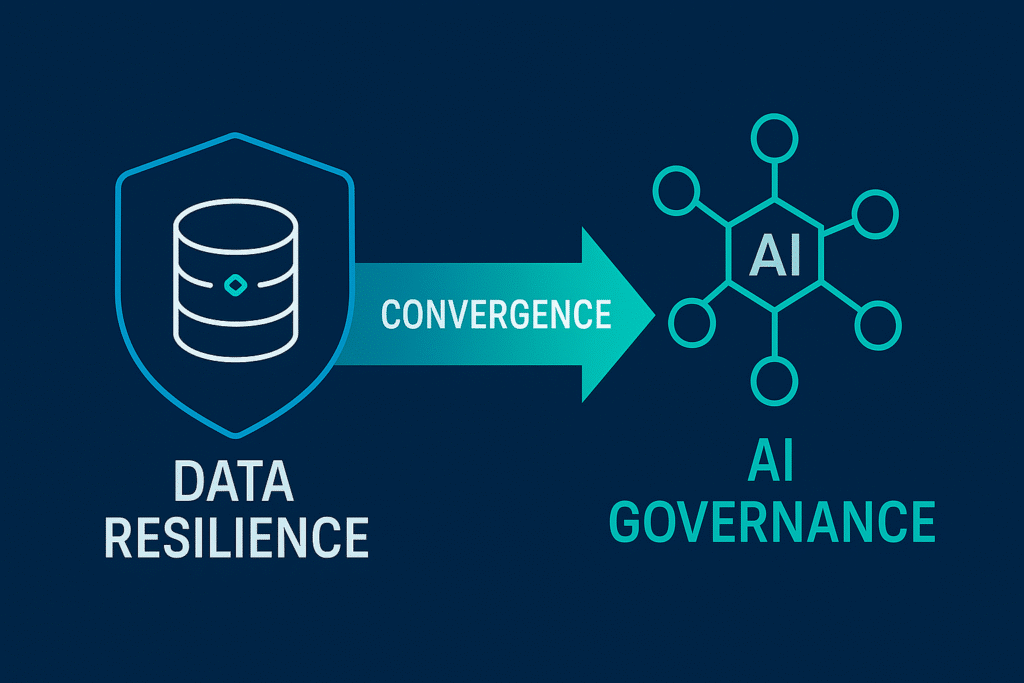
Veeam’s emphasis on “safe AI at scale” reflects a broader industry realization: resilience and governance are converging into a single platform problem.
2) Why now: AI is forcing a new definition of data resilience
AI is not just increasing compute demand, it is increasing data scrutiny.
Most organizations have discovered that their data is fragmented across:
- SaaS platforms
- Cloud workloads
- File shares and collaboration tools
- Endpoints
- Backup repositories
Unstructured data (documents, emails, chats, recordings) now represents the majority of enterprise data volume.
Veeam’s acquisition messaging directly calls this out: AI initiatives stall when data cannot be trusted, due to issues with accuracy, lineage, permissions, identity, and privacy.
What’s different today is how AI magnifies risk.
Risk #1: The blast radius of sensitive data expands
AI workflows often aggregate data from many systems into training datasets, RAG pipelines, or analytics stores.
Without strong discovery and governance, sensitive data can be unintentionally included, leading to:
- Regulatory exposure
- Contractual violations
- IP leakage
Risk #2: Recovery requires more than speed
Fast restores are table stakes.
The real differentiator is restoring known-good data and re-establishing trust. If your environment contains unknown sensitive data sprawl or over-permissioned access, you can restore quickly and still fail audits, or reintroduce risk into production.
This is why “trusted data platform” language resonates:
- The business wants AI outcomes
- Security wants risk reduction
- IT wants resilience
- Compliance wants provable controls
3) DSPM explained (and why backups are now in scope)
Data Security Posture Management (DSPM) focuses on discovering data, classifying it, assessing exposure risk, and continuously monitoring how it is stored and accessed across complex environments.
Securiti AI built its platform around unified intelligence and controls across hybrid and multicloud environments.
Here’s the critical point:
Backups are data stores.
They are not out-of-scope artifacts. They contain the most complete historical record of your environment, and the exact content attackers and auditors care about.
Backups change the DSPM conversation in three ways
- Data duplication
Sensitive data multiplies rapidly across backup chains, replicas, and archives. - Access pathways
Backup consoles and repositories become high-value targets. - Recovery integrity
Governance signals, classification, lineage, permissions, enable safer restores and reduce the risk of reintroducing compromised data.
For IT leaders, the takeaway is clear:
This is not about buying another tool. It’s about acknowledging that data protection is now inseparable from security and compliance posture.
4) What changes for IT leaders: 7 practical implications
If you are a CIO, CISO, Head of Infrastructure, or IT Director, this acquisition affects how your program will be evaluated over the next 12-24 months.
1) Backup posture will be audited like a security control
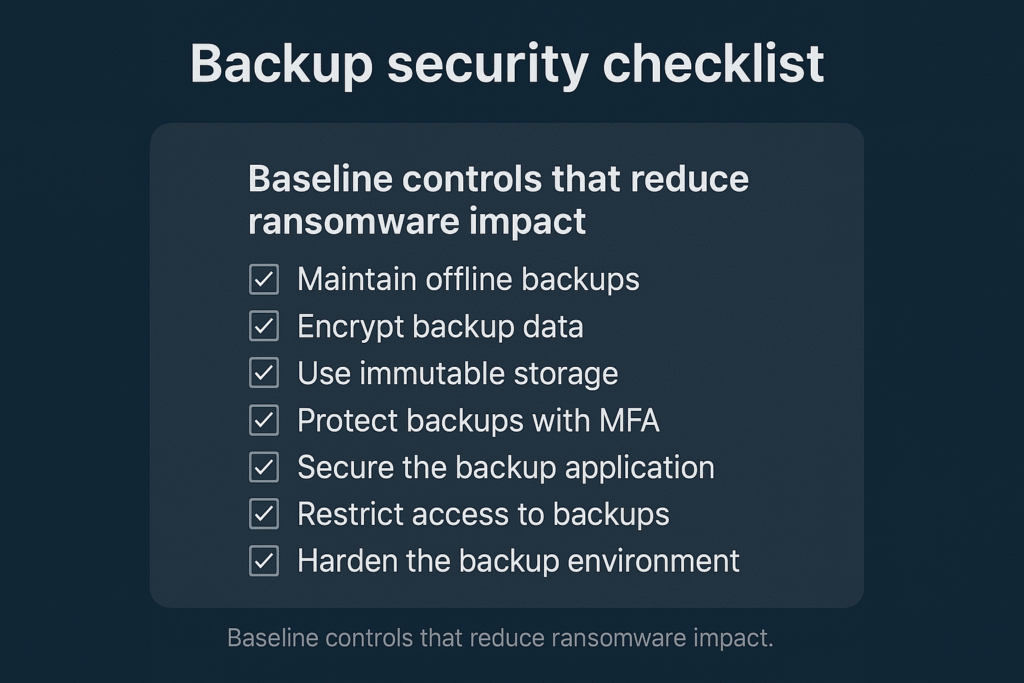
Expect deeper scrutiny around immutability, MFA, logging, and privileged access.
2) AI initiatives will force stronger discovery and classification
AI programs fail when leaders cannot confidently say, “This data is safe to use.”
3) Recovery becomes “recover with context”
Speed matters, but integrity and confidence matter more.
4) BaaS providers must speak governance
Retention alone is no longer enough.
5) Consolidation pressure increases
Veeam is positioning directly against broader data security platforms.
6) Secondary data becomes an analytics asset, if trusted
Historical backup data has value, but only with governance controls.
7) New trust metrics will emerge
Expect dashboards to include classification coverage, policy compliance, and recovery confidence, not just uptime.
5) What IT Vortex recommends: an AI-ready BaaS roadmap
The right response is not to rip and replace your environment.
It’s to modernize your Backup as a Service (BaaS) strategy so resilience, security, and governance reinforce each other.
Learn more about our approach here:
https://www.theitvortex.com/veeam-baas-offerings/
https://www.theitvortex.com/back-up-as-a-service-why-everyone-needs-it/
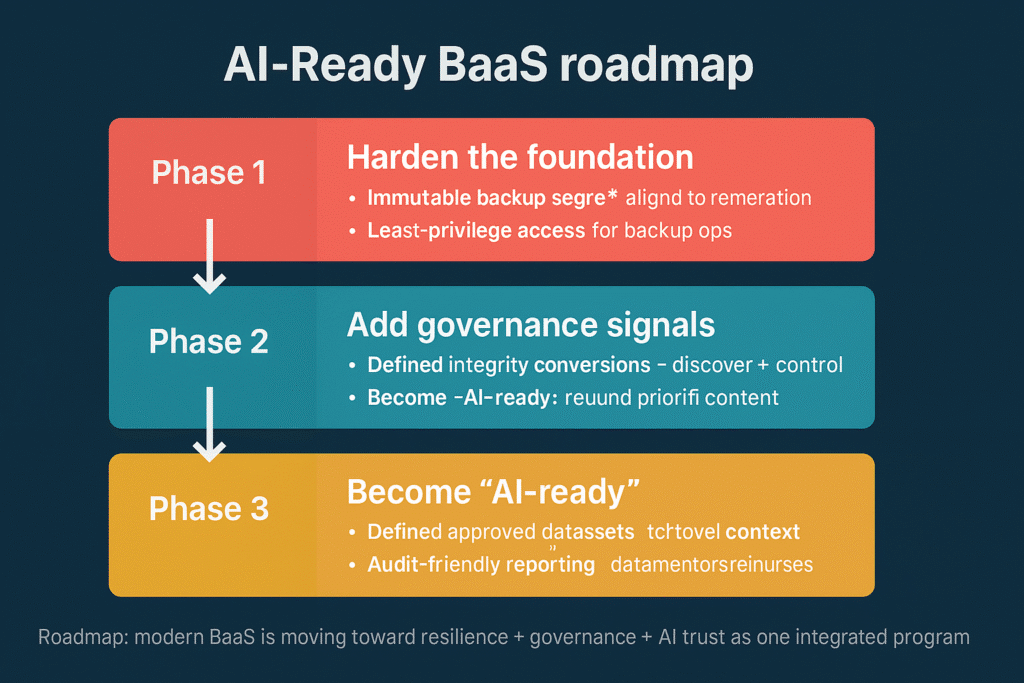
Phase 1: Harden the foundation
- Immutable backup architecture
- Least-privilege access
- MFA for backup systems
- Monitoring and alerting
- Regular restore validation
Phase 2: Add governance signals
- Identify sensitive data locations
- Classify consistently (PII, PHI, PCI, IP)
- Measure exposure risk
- Apply preventative controls
Phase 3: Become AI-ready
- Approved datasets for AI workloads
- Data lineage and change control
- Policy-driven access
- Audit-ready reporting
6) FAQ
What did Veeam acquire Securiti AI for?
To unify data resilience with DSPM, privacy, governance, and AI trust, enabling safe AI adoption at scale.
What is DSPM and why does it matter for backups?
DSPM helps discover, classify, and control data risk. Backups contain sensitive data and must be governed like production systems.
Does this change ransomware recovery strategy?
Yes. Recovery must ensure data integrity and compliance, not just speed.
Where should I start?
Start with immutability, access controls, restore validation, and data classification. IT Vortex can help operationalize this in phases.
Sources and Further Reading
- Veeam acquisition announcement
- Veeam completion release
- Reuters coverage of the acquisition
- https://securiti.ai